On Grand Strategy – B.H. Liddell Hart

Synopsis:

B.H. Liddell Hart defines grand strategy – vis-à-vis international affairs – within a context of so-called acquisitive and conservative states. Acquisitive states tend to be predatory, whereas conservative states lean on deterrence as their vital center of policy. Likewise, Liddell Hart stresses economy of force as a keystone of success for both types of states.

Excerpts:

“Whereas strategy is only concerned with the problem of ‘winning the war’, grand strategy must take a longer view – for its problem is the winning of the peace. Such an order of thought is not the matter of ‘putting the cart before the horse’, but but of being clear as to where the horse and cart are going.

“Another conclusion which develops from the study of grand strategy, against the background of history, is the practical necessity of adapting the general theory of strategy to the nature of a nation’s fundamental policy.

“Victory in the true sense implies that the state peace, and of one’s people, is better after the war than before. Victory in this sense is only possible if a quick result can be gained or if a long effort can be economically proportioned to the national resources.

“The less that a nation has regard for moral obligations the more it tends to respect physical strength – the deterrent power of a force too strong to be challenged with impunity.

“It is folly to imagine that the aggressive types, whether individuals or nations, can be bought off – or, in modern language, ‘appeased’ – since the payment of danegeld stimulates a demand for more danegeld. But they can be curbed. Their very belief in force makes them more susceptible to the deterrent effect of a formidable opposing force.

*All excerpts have been taken from Strategy, BN Publishing.

Military Policy – Antoine-Henri Jomini

Synopsis:

Institutions, systems, as well as enduring strategic principles tend to define the Jominian approach to military policy. In this way, Jomini’s tri-causal formula endeavors to allay the development of ineffective military policy via a systematic application of known effective military practices. Further, Jominian institutions – and systems – operate top-down as well as bottom-up to increase strategic effectiveness across a broad spectrum.

Excerpts:

“Military policy may be said to embrace all the combinations of any projected war, except those relating to the diplomatic art and strategy.

“Experience has constantly proved that a mere multitude of brave men armed to the teeth make neither a good army nor a national defense.

“A good army commanded by a general of ordinary capacity may accomplish great feats; a bad army with a good general may do equally well; but an army will certainly do a great deal more if its own superiority and that of the general be combined.

“Strategy alone will remain unaltered, with its principles the same as under the Scipios and Caesars, Frederick and Napoleon, since they are independent of the nature of the arms and the organization of the troops.

“If the prince has not a military education it will be very difficult for him to fulfill his duty in this respect. In this case – which is, unfortunately, of too frequent occurrence – the defect must be supplied by wise institutions, at the head of which are to be placed a good system of the general staff, a good system of recruiting, and a good system of national reserves.

*All excerpts have been taken from The Art of War, BiblioBazaar.

Defining War – John Keegan

Synopsis:

John Keegan’s cultural theory of war takes aim at the linear approach of Carl von Clausewitz’s prime mover of warfare – i.e. politics. According to Keegan, culture sustains as well as defines politics within human action – which means cultural prime movers operate as the bona fide vital centers of war and strategy. Within such a construct, strategy may be directed by politics – but politics is directed by culture.

Excerpts:

“Clausewitz’s thought is incomplete. It implies the existence of states, of state interests and of rational calculation about how they may be achieved. Yet war antedates the state, diplomacy and strategy by many millennia.

“War as the continuation of policy’ was the form Clausewitz chose to express the compromise for which the states he knew had settled. It accorded respect to their prevailing ethics – of absolute sovereignty, ordered diplomacy and legally binding treaties – while making allowance for the overriding principle of state interest.

“Clausewitz was struggling to advance a universal theory of what war ought to be, rather than what it actually was and had been.

“The Philhellenes tried but failed to make the Greeks accept their military culture. Clausewitz did not try but would have failed to make the Cossacks accept his military culture. What he and they failed to see was that their own Western way of fighting was quite as much an expression of their own culture as the ‘live to fight another day’ tactics of the Cossacks and the klephts.

“Clausewitz, raised in a world in which royal mana and military taboos had been extinguished apparently for good, found the words to legitimize the new order. That it was no order at all, and that his philosophy of warfare was a recipe for the destruction of European culture, he failed to perceive altogether.

*All excerpts have been taken from A History of Warfare, Vintage Books.

On Liberalism and Empire – G. John Ikenberry

Synopsis:

G. John Ikenberry surveys the history of liberal internationalism in his book A World Safe for Democracy – as well as attempts to forecast its future. With its origins in nineteenth century European imperialism, liberal internationalism generates a novel international order – which tends to advance a fusion of national identity with global consent and consensus networks. Likewise, notions of modernity bond the networks – which catalyze a dynamic sense of shared experience across a wide spectrum of nations.

Excerpts:

“Empire has many different meanings and manifestations, but in essence it can be understood as a hierarchical form of order in which a leading state exercises formal or informal political control over a weaker polity.

“Liberalism offers a vision of political order based on restraint of power; its principles include the rule of law, separation of powers, protection of property rights, and guarantees of political rights and freedoms. In the same way, liberal internationalism offers principles and projects for the postimperial organization of the world.

“In the sweeping narratives of the liberal ascendancy, liberal democracies were vanguard states leading the world into a new political epoch. Liberal internationalists saw the world being reshaped by the forces of modernity: some states were leading the way and others were following.

“The European or Western order was dedicated to building relations based on mutual recognition, sovereign equality, and territorial independence. The extra-European order was dedicated to promoting a particular idea of civilization and transmitting its supposed benefits to the rest of the world.

“The fact that imperialism was increasingly brought within an international legal framework made it easier for liberal internationalists to reconcile empire (for the British, at least their own empire) with a vision of a world ordered by law and cooperation.

*All excerpts have been taken from A World Safe for Democracy: Liberal Internationalism and the Crises of Global Order, Yale University Press.

The Vandalic and Berber Insurgencies – Procopius

Synopsis:

Book IV of The Wars of Justinian by Procopius offers a narrative history of the immediate aftermath of the East Roman victory over the Vandal Kingdom in North Africa by the general Belisarius. As a witness to some of the events, Procopius offers keen insights into the Vandal as well as Berber insurgencies which followed the departure of Belisarius. Further, the insurgencies the Romans encountered were continuous with flash-points of high intensity for roughly a decade.

Dispossessed of their country by the Roman conquest, the remaining aggrieved Vandal elite stirred mutiny within the Roman army in North Africa – and utilized puppet Roman commanders in an endeavor to reinstate an independent kingdom. Discerning the dichotomy in the Roman army, the Berbers inaugurated their own rebellion – which increased the atomized landscape. Ultimately, the East Roman army would be victorious – and Byzantine North Africa would go on to become a citadel of order as well as prosperity in the following century for the empire.

Excerpts:

“And it came about during this year that a most dread portent took place. For the sun gave forth its light without brightness, like the moon, during this whole year, and it seemed exceedingly like the sun in eclipse, for the beams it shed were not clear nor such as it is accustomed to shed. And from the time when this thing happened men were free neither from war nor pestilence nor any other thing leading to death. And it was the time when Justinian was in the tenth year of his reign.

“In the Roman army there were, as it happened, not less than one thousand soldiers of the Arian faith; and most of these were barbarians, some of these being of the Herulian nation. Now these men were urged on to the mutiny by the priests of the Vandals with the greatest zeal.

“…when they had sailed into Carthage, Germanus counted the soldiers whom they had, and upon looking over the books of the scribes where the names of all the soldiers were registered, he found that a third of the army was in Carthage and the other cities, while all the rest were arrayed with the tyrant against the Romans.

“Solomon sailed to Carthage, and having rid himself of the sedition of Stotzas, he ruled with moderation and guarded Libya securely, setting the army in order, and sending to Byzantium and to Belisarius whatever suspicious elements he found in it, and enrolling new soldiers to equal their number, and removing those of the Vandals who were left and especially all their women from the whole of Libya. And he surrounded each city with a wall, and guarding the laws with great strictness, he restored the government completely. And Libya became under his rule powerful as to its revenues and prosperous in other respects.

“…the Moors did not think it advisable for them to fight a pitched battle with the Romans; for they did not hope to overcome them in this kind of contest; but they did have hope, based on the difficult character of the country around Aurasium, that the Romans would in a short time give up by reason of the sufferings they would have to endure and would withdraw from there, just as they formerly had done.

*All excerpts have been taken from The Complete Procopius Anthology, Bybliotech.

The Decline of Roman Power in the West – J.B. Bury

Synopsis:

In The Invasion of Europe by the Barbarians, historian J.B. Bury offers a narrative account of the deluge of barbarian invasions – and mass migrations – which afflicted the Roman Empire in the fifth century AD. Bury also chronicles the early evolution of the barbarian kingdoms in Western Europe throughout late antiquity.

The chapter Bury dedicates to the decline of Roman power in the western half of the empire centers on institutional collapse of the state, and the ensuing snowball of barbarianization within the Roman army. Barbarianization of the army thus allowed for the eventual consummation of an Italian kingdom under the rule of the barbarian warlord Odovacar.

Excerpts:

“The contribution which the Vandals made to the shaping of Europe was this: the very existence of their kingdom in Africa, and of their naval power in the Mediterranean, acted as a powerful protection for the growth of the new German kingdoms in Gaul and Spain, and ultimately helped the founding of a German kingdom in Italy, by dividing, diverting, and weakening the forces of the Empire. The Vandals had got round, as it were, to the rear of the Empire; and the effect of their powerful presence there was enhanced by the hostile and aggressive attitude which they continuously adopted.

“He (Ricimer) became through circumstances an emperor-maker; and his difficulty was this. If he set up too strong a man, his own power would have probably been overridden; his own fall would have been the consequence; while on the other hand weak upstarts were unable to maintain their position for any length of time, since public opinion did not respect them.

“It is also to be noted that in the intervals between the reigns of the emperors whom Ricimer set up and pulled down, when there was no emperor regnant in Italy, it did not mean that there was no emperor at all. At such times the imperial authority was entirely invested in the eastern emperor who reigned at Constantinople, the Emperor Leo; and this, too, was fully acknowledged by Ricimer, who indeed selected two of his emperors by arrangement with Leo.

“Odovacar had statesmanlike qualities, and he decided against the system of Ricimer, which had proved thoroughly unsatisfactory and unstable. His idea was to rule Italy under the imperial authority of Constantinople, unhampered by a second emperor in Italy, whom recent experiences had shown to be worse than useless. There would have been no difficulty for Odovacar in adopting this policy, if there had existed no second emperor at the time; but Julius Nepos was still alive, and, what was most important, he had been recognized at Constantinople.

“Odovacar was not hampered, as Ricimer had been, by the nominal authority of a resident emperor; he was able to pursue his own policy without any embarrassment, and to act as an independent ruler. His policy was one of peace; he was entirely averse from aggression. It must be noted, too, that his position was much easier than that of Ricimer, because the Vandal hostilities had ceased. Gaiseric had died in 477; and two years before his death he had made peace with Rome, and Odovacar had induced him to restore Sicily in return for a yearly payment.

*All excerpts have been taken from The Invasion of Europe by the Barbarians, Endeavour Press Ltd.

The Career of Alexander the Great – H.G. Wells

Synopsis:

In The Outline of History, H.G. Wells chronicles the metamorphosis of humanity from its earliest beginnings until the time of his own contemporary epoch. Wells maps the rise and decline of civilizations by describing the world historical individuals most influential at setting the course of society. His biography of Alexander the Great offers his own keen insights, and exhibits the intellectual dispositions of the era in which Wells lived.

Excerpts:

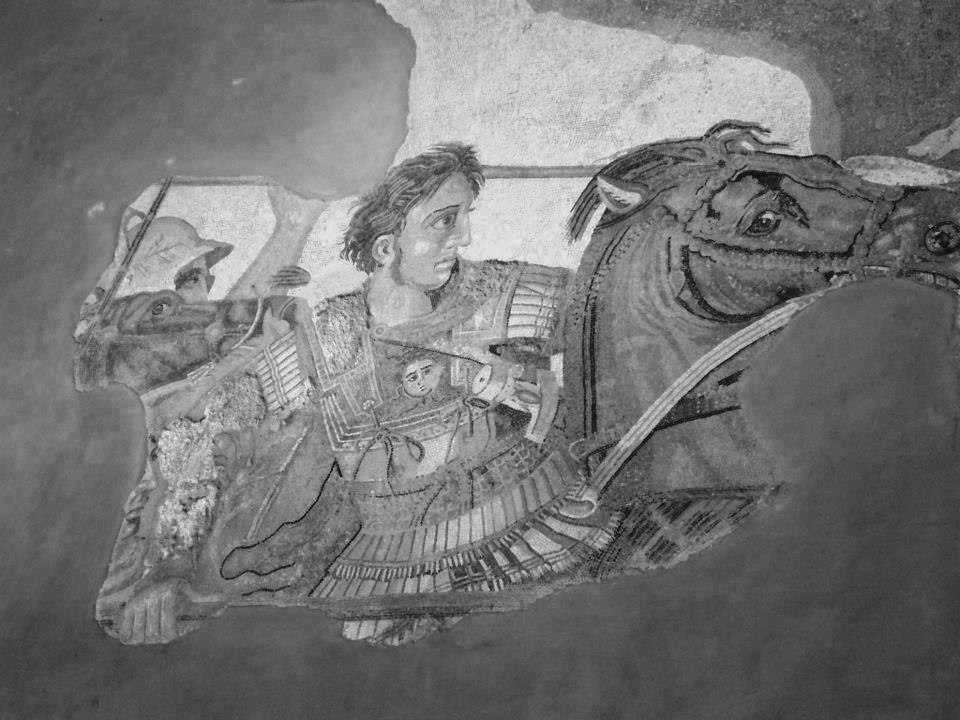
“Alexander was, as few other monarchs have ever been, a specially educated king; he was educated for empire. Aristotle was but one of the several able tutors his father chose for him. Philip confided his policy to him, and entrusted him with commands and authority by the time he was sixteen. He commanded the cavalry at Chaeronea under his father’s eye. He was nursed into power – generously and unsuspiciously. To any one who reads his life with care it is evident that Alexander started with an equipment of training and ideas of unprecedented value.

“The strong sanity he inherited from his father had made him a great soldier; the teaching of Aristotle had given him something of the scientific outlook upon the world. He had destroyed Tyre; in Egypt, at one of the mouths of the Nile, he now founded a new city, Alexandria, to replace that ancient centre of trade. To the north of Tyre, near Issus, he founded a second port, Alexandretta. Both of these cities flourish to this day, and for a time Alexandria was perhaps the greatest city in the world.

“…he was forming no group of statesmen about him; he was thinking of no successor; he was creating no tradition – nothing more than a personal legend. The idea that the world would have to go on after Alexander, engaged in any other employment than the discussion of his magnificence, seems to have been outside his mental range. He was still young, it is true, but well before Philip was one and thirty he had been thinking of the education of Alexander.

“We are too apt to consider the career of Alexander as the crown of some process that had long been afoot; as the climax of a crescendo. In a sense, no doubt, it was that; but much more true is it that it was not so much an end as a beginning; it was the first revelation to the human imagination of the oneness of human affairs. The utmost reach of the thought of Greece before his time was of a Persian empire Hellenized, a predominance in the world of Macedonians and Greeks. But before Alexander was dead, and much more after he was dead and there had been time to think him over, the conception of a world law and organization was a practicable and assimilable idea for the minds of men.

“For some generations Alexander the Great was for mankind the symbol and embodiment of world order and world dominion. He became a fabulous being. His head, adorned with the divine symbols of the demi-god Hercules or the god Ammon Ra, appears on the coins of such among his successors as could claim to be his heirs. Then the idea of world dominion was taken up by another great people, a people who for some centuries exhibited considerable political genius, the Romans; and the figure of another conspicuous adventurer, Caesar, eclipsed for the western half of the old world the figure of Alexander.

*All excerpts have been taken from The Outline of History, Norwood Press.

The Law of Mind – Charles Peirce

Synopsis:

Charles Peirce’s law of mind involves a synergy of continuity, dispersion, and generality. According to Peirce, ideas evolve within a continuum of interacting association – i.e. vis-à-vis other ideas, past and present. Further, generalities tend to be the products of the interaction via the law of mind’s dispersion of ideas from the continuum.

Excerpts:

“Logical analysis applied to mental phenomena shows that there is but one law of mind, namely, that ideas tend to spread continuously and to affect certain others which stand to them in a peculiar relations of affectibility. In this spreading they lose intensity, and especially the power of affecting others, but gain generality and become welded with other ideas.

“The two generally recognized principles of association, contiguity and similarity, the former is a connection due to a power without, the latter a connection due to a power within.

“How can a past idea be present? Not vicariously. Then, only by direct perception. In other words, to be present, it must be ipso facto present. That is, it cannot be wholly past; it can only be going, infinitesimally past, less past than any assignable past date. We are thus brought to the conclusion that the present is connected with the past by a series of real infinitesimal steps.

“In an infinitesimal interval we directly perceive the temporal sequence of its beginning, middle, and end – not, of course, in the way of recognition, for recognition is only of the past, but in the way of immediate feeling.

“Time logically supposes a continuous range of intensity in feeling. It follows, then, from the definition continuity, that when any particular kind of feeling is present, an infinitesimal continuum of all feelings differing infinitesimally from that is present.

*All excerpts have been taken from Philosophical Writings of Peirce, Dover.

On Moral Effect – Ardant du Picq

Synopsis:

According to Ardant du Picq, synthesis of moral and physical effects tends to advance the greatest strategic influence over international affairs vis-à-vis power-projection. In this way, moral effect harmonizes with material action via amplification of power-projection. Finally, as the material threshold increases, the moral effect correspondingly increases – but only insofar as the synthesis sustains credibility.

Excerpts:

“Material action on troops lies in destructive power, the moral effect lies in the fear it inspires.

“In battle, two moral actions, even more than two material actions, are opposed: the strongest wins. The winner often loses more by fire than the destruction.

“Armor, in reducing the material effect that one can suffer, reduces as well the dominating moral effect of fear… You feel that an armored enemy will succeed in reaching you.

“The great superiority of Roman tactics lay in their constant search for ways to combine physical and moral effects. Moral effect passes, physical effect does not. The Greeks searched for dominance. The Romans sought to kill, and kill they did, and followed the better path. Their moral action was supported by solid, deadly swords.

“In indecisive combat, he wins who can show, and merely show, battalions and squadrons in good order. The fear of the unknown.

*All excerpts have been taken from Battle Studies, University Press of Kansas.

Power in Flux – Joseph Nye Jr.

Synopsis:

According to Joseph Nye, soft power within a context of international affairs tends to define a competitive struggle – which advances an indirect approach. The indirect approach uses dispersion – or sometimes fusion – vis-à-vis the devices of co-option and attraction. Further, both devices sustain fluidity within international politics, which may increase – or decrease – competitive dynamics among states.

Excerpts:

“Power is the ability to influence the behavior of others to get the outcomes one wants… You can coerce them with threats; you can induce them with payments; or you can attract and co-opt them to want what you want.

“Power always depends on the context in which the relationship exists.

“The indirect way to get what you want has sometimes been called ‘the second face of power.’ A country may obtain the outcomes it wants in world politics because other countries – admiring its values, emulating its example, aspiring to its level of prosperity and openness – want to follow it.

“Soft power rests on the ability to shape the preferences of others.

“Soft power is not merely the same as influence. After all, influence can also rest on the hard power of threats or payments. And soft power is more than just persuasion or the ability to move people by argument. It is also the ability to attract, and attraction often leads to acquiescence.

*All excerpts have been taken from Soft Power: The Means to Success in World Politics, PublicAffairs.