Horses and Hoplites – John France

Synopsis:

Perilous Glory chronicles the ascendancy of Western military power in world history. Military historian John France dedicates a chapter of his book to a comparison of the competing styles of warfare of the ancient Greeks and Persians. Both styles of warfare were well adapted to distinct geographical settings, and both were notably hamstrung operating outside of those settings. The Persian military relied on cavalry mobility whereas their Greek counterparts utilized heavy infantry hoplites.

Excerpts:

“Like almost all who wrote about war, Greek writers, Herodotus amongst them, liked to emphasise its noble aspect: the valour of the hoplite, fighting honourably face to face and breast to breast against his enemies. They preferred to forget the sneaking around to surprise and destroy villages and cities, the bullying of peasants and the squalid destruction of their crops.

“Bloody though hoplite confrontations were, it has been suggested that the citizens perceived them as a rapid and efficient way of settling quarrels between states, and certainly better than drawn-out struggles in which severe long-term harm to the countryside and city might get out of hand. Moreover, the brutal violence of this clash of arms with its rigid subordination of the individual to the collective mass was possible because the citizens had agreed to this style of war and thus were bound to it by public commitment.

“For the Delian League became an Athenian empire. Athens meddled in the politics of the Delian cities to favour democratic regimes, and planted colonies of Athenians in their lands where they formed military bases. The tributes from the League and the taxes upon foreigners trading with Athens created enormous incomes which could be used to pay towers for the fleet and to support strong armies. Here was the Athenian culture of leisure and greed at work.

“The Persian wars and then the long quarrels of the Greek city-states created a kind of military laboratory in Greece, stimulating ideas and new developments. The most obvious effect of this was the development of the hoplite phalanx. It became the very embodiment of close-order, a tight mass of men working together, able to resist enemies with their hedgehog of spears and to threaten them by sheer weight and momentum. However, this was only really achieved as the citizen-soldier was superseded by the professional soldier.

“The Greek front was not all that vital to the Persian Empire, and it managed to regain Anatolia by an adroit diplomacy which exploited the quarrels of the Greeks. The priority for the Persian Empire was speed of movement and the ability to fight in other places, especially on the long Asian frontiers where cavalry was the most useful arm. No power can be strong everywhere and in every aspect of war, and the Persian army was no exception to this general rule. And when they wanted heavy infantry, they could always hire them at need from the quarrelsome city-states of Greece whose mercenaries were perfectly willing to serve for money.

*All excerpts have been taken from Perilous Glory: The Rise of Western Military Power, Yale University Press.

Defining War – John Keegan

Synopsis:

John Keegan’s cultural theory of war takes aim at the linear approach of Carl von Clausewitz’s prime mover of warfare – i.e. politics. According to Keegan, culture sustains as well as defines politics within human action – which means cultural prime movers operate as the bona fide vital centers of war and strategy. Within such a construct, strategy may be directed by politics – but politics is directed by culture.

Excerpts:

“Clausewitz’s thought is incomplete. It implies the existence of states, of state interests and of rational calculation about how they may be achieved. Yet war antedates the state, diplomacy and strategy by many millennia.

“War as the continuation of policy’ was the form Clausewitz chose to express the compromise for which the states he knew had settled. It accorded respect to their prevailing ethics – of absolute sovereignty, ordered diplomacy and legally binding treaties – while making allowance for the overriding principle of state interest.

“Clausewitz was struggling to advance a universal theory of what war ought to be, rather than what it actually was and had been.

“The Philhellenes tried but failed to make the Greeks accept their military culture. Clausewitz did not try but would have failed to make the Cossacks accept his military culture. What he and they failed to see was that their own Western way of fighting was quite as much an expression of their own culture as the ‘live to fight another day’ tactics of the Cossacks and the klephts.

“Clausewitz, raised in a world in which royal mana and military taboos had been extinguished apparently for good, found the words to legitimize the new order. That it was no order at all, and that his philosophy of warfare was a recipe for the destruction of European culture, he failed to perceive altogether.

*All excerpts have been taken from A History of Warfare, Vintage Books.

On Liberalism and Empire – G. John Ikenberry

Synopsis:

G. John Ikenberry surveys the history of liberal internationalism in his book A World Safe for Democracy – as well as attempts to forecast its future. With its origins in nineteenth century European imperialism, liberal internationalism generates a novel international order – which tends to advance a fusion of national identity with global consent and consensus networks. Likewise, notions of modernity bond the networks – which catalyze a dynamic sense of shared experience across a wide spectrum of nations.

Excerpts:

“Empire has many different meanings and manifestations, but in essence it can be understood as a hierarchical form of order in which a leading state exercises formal or informal political control over a weaker polity.

“Liberalism offers a vision of political order based on restraint of power; its principles include the rule of law, separation of powers, protection of property rights, and guarantees of political rights and freedoms. In the same way, liberal internationalism offers principles and projects for the postimperial organization of the world.

“In the sweeping narratives of the liberal ascendancy, liberal democracies were vanguard states leading the world into a new political epoch. Liberal internationalists saw the world being reshaped by the forces of modernity: some states were leading the way and others were following.

“The European or Western order was dedicated to building relations based on mutual recognition, sovereign equality, and territorial independence. The extra-European order was dedicated to promoting a particular idea of civilization and transmitting its supposed benefits to the rest of the world.

“The fact that imperialism was increasingly brought within an international legal framework made it easier for liberal internationalists to reconcile empire (for the British, at least their own empire) with a vision of a world ordered by law and cooperation.

*All excerpts have been taken from A World Safe for Democracy: Liberal Internationalism and the Crises of Global Order, Yale University Press.

The Career of Alexander the Great – H.G. Wells

Synopsis:

In The Outline of History, H.G. Wells chronicles the metamorphosis of humanity from its earliest beginnings until the time of his own contemporary epoch. Wells maps the rise and decline of civilizations by describing the world historical individuals most influential at setting the course of society. His biography of Alexander the Great offers his own keen insights, and exhibits the intellectual dispositions of the era in which Wells lived.

Excerpts:

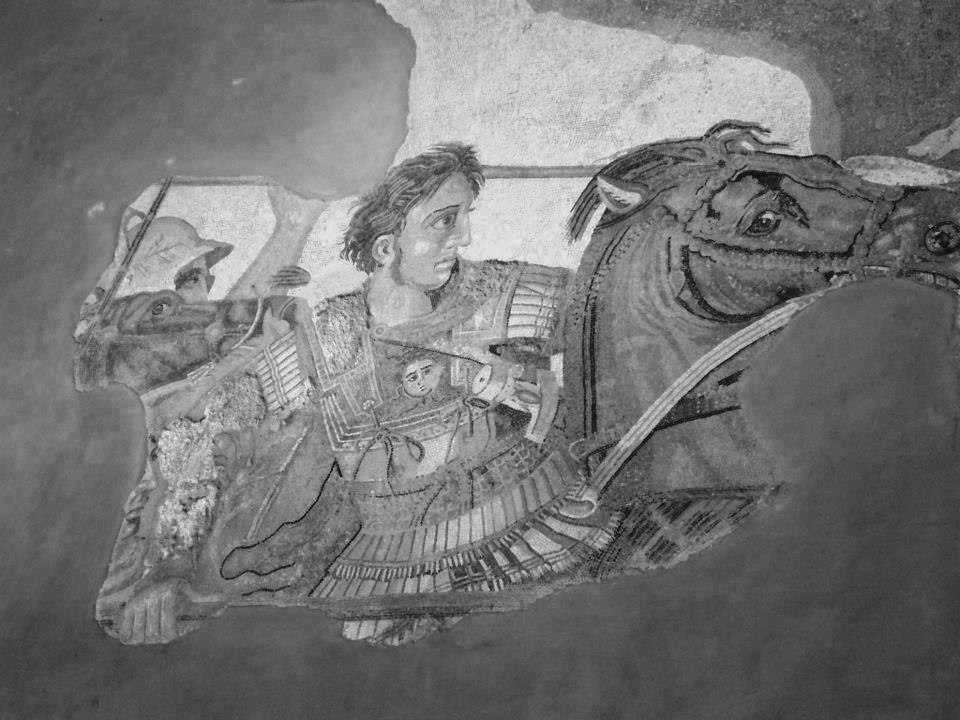
“Alexander was, as few other monarchs have ever been, a specially educated king; he was educated for empire. Aristotle was but one of the several able tutors his father chose for him. Philip confided his policy to him, and entrusted him with commands and authority by the time he was sixteen. He commanded the cavalry at Chaeronea under his father’s eye. He was nursed into power – generously and unsuspiciously. To any one who reads his life with care it is evident that Alexander started with an equipment of training and ideas of unprecedented value.

“The strong sanity he inherited from his father had made him a great soldier; the teaching of Aristotle had given him something of the scientific outlook upon the world. He had destroyed Tyre; in Egypt, at one of the mouths of the Nile, he now founded a new city, Alexandria, to replace that ancient centre of trade. To the north of Tyre, near Issus, he founded a second port, Alexandretta. Both of these cities flourish to this day, and for a time Alexandria was perhaps the greatest city in the world.

“…he was forming no group of statesmen about him; he was thinking of no successor; he was creating no tradition – nothing more than a personal legend. The idea that the world would have to go on after Alexander, engaged in any other employment than the discussion of his magnificence, seems to have been outside his mental range. He was still young, it is true, but well before Philip was one and thirty he had been thinking of the education of Alexander.

“We are too apt to consider the career of Alexander as the crown of some process that had long been afoot; as the climax of a crescendo. In a sense, no doubt, it was that; but much more true is it that it was not so much an end as a beginning; it was the first revelation to the human imagination of the oneness of human affairs. The utmost reach of the thought of Greece before his time was of a Persian empire Hellenized, a predominance in the world of Macedonians and Greeks. But before Alexander was dead, and much more after he was dead and there had been time to think him over, the conception of a world law and organization was a practicable and assimilable idea for the minds of men.

“For some generations Alexander the Great was for mankind the symbol and embodiment of world order and world dominion. He became a fabulous being. His head, adorned with the divine symbols of the demi-god Hercules or the god Ammon Ra, appears on the coins of such among his successors as could claim to be his heirs. Then the idea of world dominion was taken up by another great people, a people who for some centuries exhibited considerable political genius, the Romans; and the figure of another conspicuous adventurer, Caesar, eclipsed for the western half of the old world the figure of Alexander.

*All excerpts have been taken from The Outline of History, Norwood Press.

The Law of Mind – Charles Peirce

Synopsis:

Charles Peirce’s law of mind involves a synergy of continuity, dispersion, and generality. According to Peirce, ideas evolve within a continuum of interacting association – i.e. vis-à-vis other ideas, past and present. Further, generalities tend to be the products of the interaction via the law of mind’s dispersion of ideas from the continuum.

Excerpts:

“Logical analysis applied to mental phenomena shows that there is but one law of mind, namely, that ideas tend to spread continuously and to affect certain others which stand to them in a peculiar relations of affectibility. In this spreading they lose intensity, and especially the power of affecting others, but gain generality and become welded with other ideas.

“The two generally recognized principles of association, contiguity and similarity, the former is a connection due to a power without, the latter a connection due to a power within.

“How can a past idea be present? Not vicariously. Then, only by direct perception. In other words, to be present, it must be ipso facto present. That is, it cannot be wholly past; it can only be going, infinitesimally past, less past than any assignable past date. We are thus brought to the conclusion that the present is connected with the past by a series of real infinitesimal steps.

“In an infinitesimal interval we directly perceive the temporal sequence of its beginning, middle, and end – not, of course, in the way of recognition, for recognition is only of the past, but in the way of immediate feeling.

“Time logically supposes a continuous range of intensity in feeling. It follows, then, from the definition continuity, that when any particular kind of feeling is present, an infinitesimal continuum of all feelings differing infinitesimally from that is present.

*All excerpts have been taken from Philosophical Writings of Peirce, Dover.

Power in Flux – Joseph Nye Jr.

Synopsis:

According to Joseph Nye, soft power within a context of international affairs tends to define a competitive struggle – which advances an indirect approach. The indirect approach uses dispersion – or sometimes fusion – vis-à-vis the devices of co-option and attraction. Further, both devices sustain fluidity within international politics, which may increase – or decrease – competitive dynamics among states.

Excerpts:

“Power is the ability to influence the behavior of others to get the outcomes one wants… You can coerce them with threats; you can induce them with payments; or you can attract and co-opt them to want what you want.

“Power always depends on the context in which the relationship exists.

“The indirect way to get what you want has sometimes been called ‘the second face of power.’ A country may obtain the outcomes it wants in world politics because other countries – admiring its values, emulating its example, aspiring to its level of prosperity and openness – want to follow it.

“Soft power rests on the ability to shape the preferences of others.

“Soft power is not merely the same as influence. After all, influence can also rest on the hard power of threats or payments. And soft power is more than just persuasion or the ability to move people by argument. It is also the ability to attract, and attraction often leads to acquiescence.

*All excerpts have been taken from Soft Power: The Means to Success in World Politics, PublicAffairs.

Hybrid Warfare – Curtis L. Fox

Synopsis:

In Hybrid Warfare, Curtis Fox attempts to define a strategic tradition of Russian hybrid warfare within a three century context. The strategy hinges on interlocking components – e.g. information operations, network-centric warfare et cetera – which advance Russian geostrategic interests vis-à-vis great power competition. Similarly, effective application of hybrid policies tend to elevate a dynamic of convergence between the ways/means – as well as ends – of Russian strategy.

Excerpts:

“Russia’s unique experience in repelling Napoleon engrained the necessity of strategic barriers and buffer states into the political class. Kutuzov, a star pupil of eminent Russian Field Marshal Suvorov, demonstrated the efficacy of defeating sophisticated and numerically superior armies using indirect methods.

“Russia does not see hybrid warfare as an independent doctrine that departs in any way from traditional military practice. To the contrary, when the Russians plan what the West has come to call ‘hybrid wars’, they are merely deploying all available methods that maximize the chances of success for their conventional military forces.

“Non-kinetic operations create space: an opening where someone capable of organization amid chaos can make gains. Kinetic operations seize this space, using SOF to probe for footholds which can then be occupied through the rapid maneuver of elite ground forces.

“In a crisis and corresponding intervention, as envisioned by Gerasimov, Russia employs a wide variety of military and non-military measures, which are closely coordinated to achieve operational objectives… Likewise, subordinate doctrines like asymmetric warfare, reflexive control, information operations, low-intensity conflict, network-centric warfare, and fifth generation warfare fit neatly into Gerasimov’s model as a tool kit for escalating or de-escalating a crisis as needed.

“Russia would formulate the hidden-hand (fait accompli) strategy: establishing information dominance (both intelligence and propaganda), using intelligence operatives to raise friendly local partisans and militias, using special operations forces to quickly eliminate key targets and seize terrain; rapidly maneuvering heavy ground forces into the battlespace to entrench gains before the enemy can react.

*All excerpts have been taken from Hybrid Warfare: The Russian Approach to Strategic Competition and Conventional Military Conflict, -30- Press Publishing.

The Emergence of Conflict – Steven LeBlanc

Synopsis:

The behavioral school of thought vis-à-vis armed conflict is perhaps most effectively expressed in Steven LeBlanc’s book Constant Battles. According to LeBlanc, a so-called ‘risk threshold’ operates as the behavioral device which initiates, deters, or limits conflict. Such a threshold is innate within human action – and serves as a prime mover for sustaining armed conflict over time.

Excerpts:

“In some societies, like highland New Guinea and the Yanomama of Venezuela, warfare was extremely frequent, with raids, ambushes, or battles occurring annually or even monthly. Often these conflicts resulted in only one or two fatalities per incident. When the numbers are tallied over a person’s life span, many of the adult males died fighting.

“Often, when communities are clustered, the land between the clusters becomes hotly contested and thus uninhabitable. These relatively empty zones, or no-man’s lands, are found throughout the world among many different types of societies and are clear evidence for conflict.

“When scholars look carefully at these weapons and ask why people like the Australian Aborigines, who have so few possessions, would have so many weapons of war – special spears, special boomerangs, special spear-throwers, and shields and clubs used only for warfare – the importance of such weaponry becomes clear.

“In the New Guinea highlands, raids often had to be planned in secret, excluding the men and women with close relatives among the group to be attacked, because they were expected to warn the intended victims. All types of societies from foragers to states have these friend-enemy dual relationships.

“People do perceive resource stress before they are starving. If no state or central authority is there to stop them, they will fight before the situation gets hopeless. Resource stress in the form of hunger, and not starvation, is what precipitates warfare.

*All excerpts have been taken from Constant Battles: Why We Fight, St. Martin’s Press.

The Architecture of Theories – Charles Peirce

Synopsis:

American philosopher Charles Peirce advanced a formulaic approach to language – which elevated linguistic clarity as a keystone of theory construction. With its emphasis on systematic language, modern analytic philosophy sustains a measure of kinship with Peirce’s ideas. Likewise, American operational – as well as strategic – doctrine features components of Peirce’s formulaic methodology by stressing representational language.

Excerpts:

“Uniformities are precisely the sort of facts that need to be accounted for. That a pitched coin should sometimes turn up heads and sometimes tails calls for no particular explanation; but if it shows heads every time, we wish to know how this result has been brought about. Law is par excellence the thing that wants a reason.

“The one primary and fundamental law of mental action consists in a tendency to generalization. Feeling tends to spread; connections between feelings awaken feelings; neighboring feelings become assimilated; ideas are apt to reproduce themselves. These are so many formulations of the one law of the growth of mind.

“The remaining systems of philosophy have been of the nature of reforms, sometimes amounting to radical revolutions, suggested by certain difficulties which have been found to beset systems previously in vogue; and such ought certainly to be in large part the motive of any new theory.

“A modern physicist on examining Galileo’s works is surprised to find how little experiment had to do with the establishment of the foundations of mechanics. His principal appeal is to common sense and il lume naturale. He always assumes that the true theory will be found to be a simple and natural one.

“The great attention given to mechanics in the seventeenth century soon so emphasized these conceptions as to give rise to the Mechanical Philosophy, or doctrine that all the phenomena of the physical universe are to be explained upon mechanical principles.

*All excerpts have been taken from Philosophical Writings of Peirce, Dover.

War in Human History – John Keegan

Synopsis:

John Keegan partially defines his cultural theory of war in A History of Warfare by examining it in a context and comparison analysis with traditional Clausewitzian ideas. Keegan believed the Clausewitzian political prime mover for war as too narrow. Politics may be the fountainhead, but culture is the impetus of the flow – and the flow once released from the fountain spreads across all human action. If strategy is directed by politics, then politics is directed by culture.

Excerpts:

“The wars Clausewitz knew, the wars in which he fought, were the wars of the French Revolution, and the ‘political motive’ for which he always looked as the precipitating and controlling factor in warmaking was, at the outset at least, always present… It must also be recognized that Clausewitz as a historian had nothing to guide him toward the importance of cultural factors in human affairs.

“For Clausewitz, as I have said, was even in his time an isolated spokesman for a warrior culture that the ancestors of the modern state were at pains to extirpate within their own borders.

“War, when it came in a ‘true’ form to that corner of Polynesia called Easter Island, proved to be a termination first of politics, then of culture, ultimately almost of life itself.

“Had Clausewitz’s mind been furnished with just one extra intellectual dimension – and it was already a very sophisticated mind indeed – he might have been able to perceive that war embraces much more than politics: that it is always an expression of culture, often a determinant of cultural forms, in some societies the culture itself.

“Man is a political animal,’ said Aristotle. Clausewitz, a child of Aristotle, went no further than to say that a political animal is a warmaking animal. Neither dared confront the thought that man is a thinking animal in whom the intellect directs the urge to hunt and the ability to kill.

*All excerpts have been taken from A History of Warfare, Vintage Books.