
Synopsis:
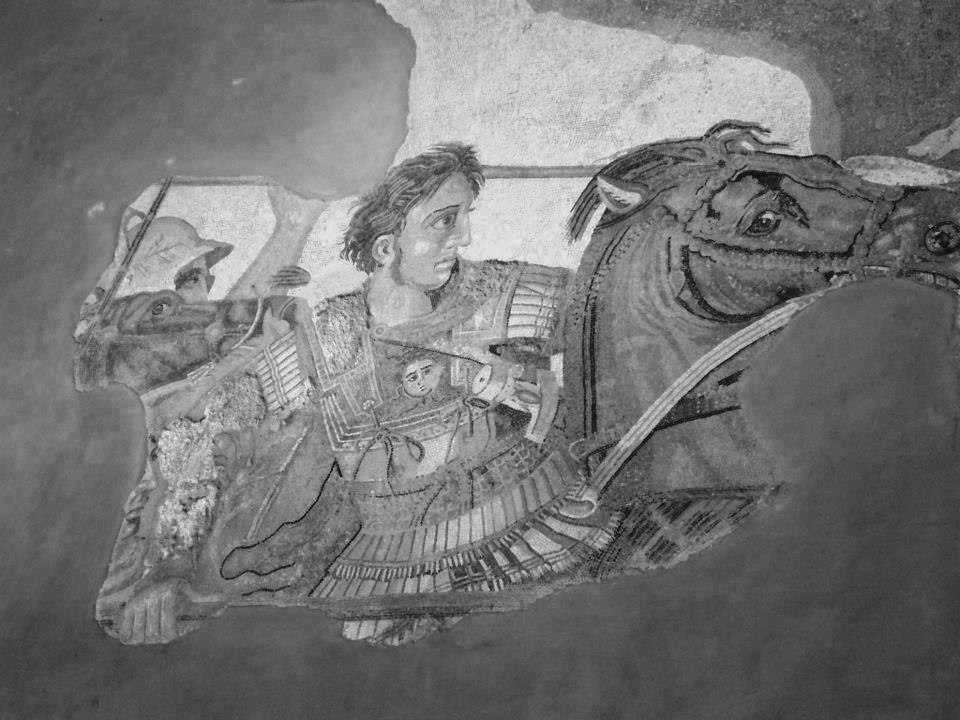
In The Outline of History, H.G. Wells chronicles the metamorphosis of humanity from its earliest beginnings until the time of his own contemporary epoch. Wells maps the rise and decline of civilizations by describing the world historical individuals most influential at setting the course of society. His biography of Alexander the Great offers his own keen insights, and exhibits the intellectual dispositions of the era in which Wells lived.
Excerpts:
“Alexander was, as few other monarchs have ever been, a specially educated king; he was educated for empire. Aristotle was but one of the several able tutors his father chose for him. Philip confided his policy to him, and entrusted him with commands and authority by the time he was sixteen. He commanded the cavalry at Chaeronea under his father’s eye. He was nursed into power – generously and unsuspiciously. To any one who reads his life with care it is evident that Alexander started with an equipment of training and ideas of unprecedented value.
“The strong sanity he inherited from his father had made him a great soldier; the teaching of Aristotle had given him something of the scientific outlook upon the world. He had destroyed Tyre; in Egypt, at one of the mouths of the Nile, he now founded a new city, Alexandria, to replace that ancient centre of trade. To the north of Tyre, near Issus, he founded a second port, Alexandretta. Both of these cities flourish to this day, and for a time Alexandria was perhaps the greatest city in the world.
“…he was forming no group of statesmen about him; he was thinking of no successor; he was creating no tradition – nothing more than a personal legend. The idea that the world would have to go on after Alexander, engaged in any other employment than the discussion of his magnificence, seems to have been outside his mental range. He was still young, it is true, but well before Philip was one and thirty he had been thinking of the education of Alexander.
“We are too apt to consider the career of Alexander as the crown of some process that had long been afoot; as the climax of a crescendo. In a sense, no doubt, it was that; but much more true is it that it was not so much an end as a beginning; it was the first revelation to the human imagination of the oneness of human affairs. The utmost reach of the thought of Greece before his time was of a Persian empire Hellenized, a predominance in the world of Macedonians and Greeks. But before Alexander was dead, and much more after he was dead and there had been time to think him over, the conception of a world law and organization was a practicable and assimilable idea for the minds of men.
“For some generations Alexander the Great was for mankind the symbol and embodiment of world order and world dominion. He became a fabulous being. His head, adorned with the divine symbols of the demi-god Hercules or the god Ammon Ra, appears on the coins of such among his successors as could claim to be his heirs. Then the idea of world dominion was taken up by another great people, a people who for some centuries exhibited considerable political genius, the Romans; and the figure of another conspicuous adventurer, Caesar, eclipsed for the western half of the old world the figure of Alexander.
*All excerpts have been taken from The Outline of History, Norwood Press.

 Strategic Studies Book Club